How to Build a Bulletproof Bug-Out Hydration System
How to Build a Bulletproof Bug-Out Hydration System
I can tell you from firsthand experience: dehydration will drop you faster than almost anything else that can go wrong in a bug-out scenario.
You can survive three weeks without food. You've got roughly three days without water — and that window shrinks fast when you're hauling 40 pounds of gear through 90-degree heat with 95% humidity. What most people get wrong about hydration in their bug-out bag isn't that they forget water entirely — it's that they treat it as an afterthought. Grab a bottle, throw it in the bag, done. That's not a hydration system. That's a coin flip.
Let me show you how to do this right.
The Water Math Nobody Wants to Do
FEMA's official minimum is half a gallon (64 oz) of drinking water per person per day. The World Health Organization bumps that to 2.5–3 liters for active adults. In a hot climate, under physical stress, carrying a loaded pack? You're looking at closer to 4 liters per day to stay functional — not just alive.
Here's the math problem: a liter of water weighs 2.2 pounds. A 72-hour supply at 3 liters per day is 9 liters — nearly 20 pounds of water alone. That's before your shelter, food, first aid kit, or anything else. Nobody's bugging out carrying 20 pounds of water unless they have a vehicle or a very forgiving spine.
The practical answer is a layered hydration strategy:
- Carry — 1 to 2 liters of clean, ready-to-drink water on your person
- Filter — a lightweight mechanical filter to process water from natural sources
- Treat — chemical backup (iodine tabs or chlorine dioxide) for situations where your filter fails or you're dealing with suspect sources
Three layers. Each one backs up the last. That's how you stay hydrated without breaking your back or your budget.
Why Your Water Vessel Choice Actually Matters
Not all water bottles are created equal when your life might depend on them. Here's what matters in a bug-out context:
Material
Plastic bottles are fine for your gym bag. They're not ideal for an emergency kit. BPA, chemical leaching under heat, and the fact that they can crack or puncture make plastic a poor long-term choice. Food-grade 18/8 stainless steel is the gold standard — it doesn't leach chemicals, it won't shatter, and it will outlast everything else in your bag.
Single-Wall vs. Insulated
This is the decision most people don't know they need to make. An insulated double-wall bottle is incredible for keeping water cold in brutal heat — but you absolutely cannot boil water in it. The air gap between the walls can cause dangerous pressure buildup. In a true survival situation where your filter has failed and fire is your only purification option, a double-wall bottle is useless for that job.
A single-wall stainless steel bottle can go directly over a flame to boil water. That's a survival capability you cannot replicate with insulated bottles or plastic.
My recommendation: carry both if weight allows, or choose a single-wall vessel if you're doing hard weight cuts. If you go one bottle, go single-wall.
Wide Mouth
Wide-mouth openings make it easy to add ice, fill from a stream or collected rainwater, and clean the bottle properly. Narrow-mouth bottles are miserable to fill from irregular water sources. In a bug-out, you're not always filling from a clean tap.
Why I Carry Klean Kanteen
I've tested a lot of bottles over 15 years of preparedness work. I've had cheap stainless bottles rust from the inside, develop funky odors, and leak from failing seals. I've had plastic bottles crack in my truck during the summer. I keep coming back to Klean Kanteen because they've consistently delivered where it counts.
Here's what I actually use and recommend:
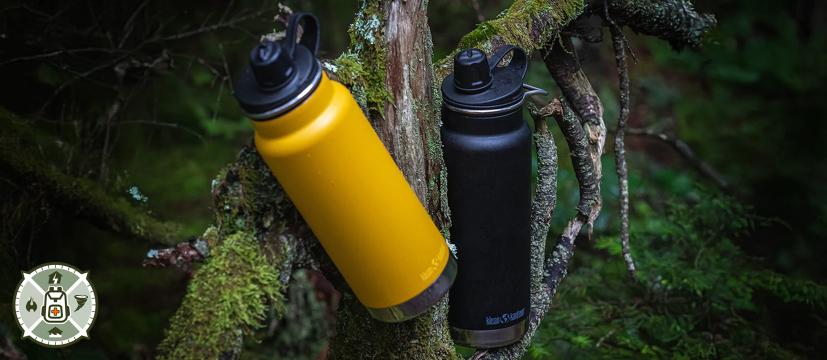
Klean Kanteen TKWide 32oz — My Everyday Carry Bottle
The Klean Kanteen TKWide 32oz is my daily driver and it earns a spot in my go-bag. At 32 ounces, it hits the sweet spot — enough water to matter, light enough not to be a burden. Here's the rundown:
- Material: Food-grade 18/8 stainless steel with chip-resistant Klean Coat finish
- Insulation: Climate Lock® double-wall vacuum — keeps water iced cold for up to 75 hours
- Cap system: TK Closure™ internal thread design — interchangeable caps, leak-proof
- Wide mouth: Easy to fill, easy to clean, easy to add ice
- Price: Around $46.95 retail (regularly on sale around $37–38)
- Warranty: Klean Kanteen's "Strong as Steel Guarantee" — they'll repair, replace, or refund
The insulation matters more than you might think even in an emergency. Hot water in 95-degree heat is miserable to drink and will not cool your core temperature. Cold water does. The TKWide's 75-hour cold retention means the ice water you loaded up before bugging out is still cold well into day three.
One critical reminder: Do NOT attempt to heat or boil water in the TKWide or any insulated bottle. The double-wall construction can cause dangerous pressure buildup. For boiling, you need the single-wall.
Klean Kanteen Classic Single Wall — Your Boil-and-Purify Option
The Klean Kanteen Classic Single Wall is the one you can put directly over a fire. Same food-grade 18/8 stainless construction, same durability, but without the insulation — which means it can serve double duty as a cook pot in a pinch. If your filter fails and your chemical tabs are gone, fire + this bottle = drinkable water.
The Classic Wide Mouth comes in sizes from 18oz to 64oz. For a bug-out bag, the 27oz or 40oz hits the weight-to-utility balance well. Pair it with the TKWide and you have a complete two-bottle system: one for drinking comfort, one for emergency purification.
Building Your Complete Hydration Layer
Layer 1: Carry Capacity
Your Klean Kanteen(s) cover Layer 1. Load them with clean water before you leave. Don't leave home with empty bottles because "you'll find water on the way." Start full.
Layer 2: Mechanical Filtration
A Sawyer Squeeze filter weighs about 3 ounces and will filter up to 100,000 gallons before needing replacement. It removes 99.99999% of bacteria and 99.9999% of protozoa. It's one of the best ounce-for-ounce investments you can make in your BOB essentials kit. Pair it with the Klean Kanteen wide-mouth opening and you can filter directly into your bottle.
Layer 3: Chemical Treatment
Aquatabs (sodium dichloroisocyanurate) or chlorine dioxide tablets are your backup-to-the-backup. They weigh almost nothing, cost almost nothing, and can treat water when your filter is frozen, clogged, or lost. Throw a small ziplock of 10-20 tabs in your kit and forget about them until you need them. Follow the dosing instructions — and note that chemical treatment doesn't remove sediment, so filter cloudy water first if possible.
Bonus: Electrolytes
Pure water keeps you alive. Electrolytes keep you functional. When you're sweating heavily under exertion — especially in heat — you're losing sodium, potassium, and magnesium along with that water. Drinking plain water without replacing electrolytes can actually make hyponatremia (low blood sodium) worse. Toss a few single-serve electrolyte packets (LMNT, Liquid IV, or similar) in your bag. They weigh nothing and could make a real difference in your cognitive function and stamina on day two.
The Florida Factor
I can't write about bug-out hydration without a Florida-specific note. If you're in a northern state, your hydration math changes in summer but is otherwise manageable. In Florida and other parts of the South Eastern US - from May through October, you're looking at heat index values that regularly hit 105°F+, and the humidity means your sweat doesn't evaporate. That means your body's cooling mechanism won't operate properly. You will sweat more, lose fluids faster, and hit dangerous dehydration faster than your northern counterparts.
Double your estimates. If the general guidance says carry 1-2 liters, you carry 2. If it says drink half a gallon per day minimum, you plan for a gallon. Florida doesn't forgive dehydration. Neither does any other hot climate during peak season.
Also: recognize the early signs of dehydration — dark urine, decreased urine output, headache, dry mouth, fatigue. By the time you feel thirsty, you're already mildly dehydrated. Drink before you're thirsty. It's one of those things that sounds simple but gets people into trouble constantly on my medical calls.
What Goes In the Bag
Here's my hydration kit as it stands today, for reference when you're building yours:
- Klean Kanteen TKWide 32oz — primary drinking vessel, loaded with water before departure (grab it here)
- Klean Kanteen Classic Single Wall 27oz or 40oz — backup and boil-capable vessel (grab it here)
- Sawyer Squeeze Filter — mechanical filtration, filters into Klean Kanteen wide mouth
- Aquatabs or chlorine dioxide tablets (20-count) — chemical backup
- Electrolyte packets (5-10 single-serve) — function under stress, not just survival
Total weight for that kit (minus the water itself) is under 12 ounces. The two bottles add roughly 12-14 more ounces. You're looking at less than 2 pounds of hydration infrastructure before you add water — and that infrastructure gives you a complete system from "leaving the house" through a multi-day bug-out.
Cross-reference this with your full bug-out bag build guide and your first aid and exposure kit — dehydration intersects with heat illness treatment, and knowing how to recognize and address both is part of a complete preparedness picture.
Bottom Line
Hydration is not glamorous preparedness gear. Nobody posts Instagram photos of their water bottles with the same enthusiasm as their custom-built AR or their night vision kit. But water will kill you faster than any other gap in your gear, and it will do it quietly and progressively — starting with your judgment before it gets to your body.
Build your hydration layer right. Carry good stainless steel vessels. Back them up with filtration and treatment. Know your daily minimums, double them for heat, and drink before you're thirsty.
Klean Kanteen's lifetime guarantee and consistent quality across 15 years of my field use makes them the bottle I keep reaching for. Pick up the TKWide 32oz here — it's on sale regularly and it'll be in your kit long after cheaper alternatives have failed.
Stay ready.
— Mr.BOBB, EMT | CERT | Ham General | Mass Casualty Trained