Pet Bug Out Bag: What to Pack for Your Dog or Cat
Your dog or cat can’t pack their own bag. If you have to leave fast, their food, medications, leash and paperwork either go with you or get left behind, and many public shelters won’t take pets at all. A pet bug out bag fixes that. Here’s what goes in one, based on the CDC’s pet emergency checklist, plus the gear I’d buy.
Quick answer: what goes in a pet bug out bag?
- Food and water: a 2-week supply of each, plus bowls and a can opener. Details
- Medications: a 2-week supply, plus a month of flea, tick and heartworm prevention.
- Papers: vet records, rabies certificate, microchip number, recent photos, in a waterproof bag. Details
- Gear: collar with ID, leash and harness, a carrier, a pet first aid kit, waste bags or litter. Our picks
Why Your Pet Needs Their Own Bag
The CDC warns that leaving pets out of evacuation plans can put pets, their owners and first responders in danger, and that many public evacuation shelters don’t accept pets other than service animals (CDC: Pet Safety in Emergencies). People delay leaving because of their animals. A packed pet bag and a plan for where you’ll go take that problem off the table.
Keep the pet bag next to your own bug out bag so you grab both on the way out. For a big dog, a dog pack lets them carry some of their own food and water.
Food, Water and Medications
The CDC’s pet preparedness kit list calls for:
- A 2-week supply of food for each animal, in waterproof containers
- A 2-week supply of water for each animal
- Non-spill food and water dishes and a manual can opener if you use canned food
- Feeding instructions for each animal
- A 2-week supply of any medications, with written instructions
- A 1-month supply of flea, tick and heartworm preventative
Two weeks of food and water is a lot to carry for a large dog, so split it: 3 days in the grab-and-go bag, and the rest in a tote at home that goes in the car if there’s time. Pack the food your pet already eats. A sudden diet change on top of the stress of a disaster is a recipe for an upset stomach. Rotate the bagged food every few months so it stays fresh.
Papers and ID
If you’re separated from your pet, or a shelter or boarding kennel asks for proof of vaccination, these are what you’ll need. Keep copies in a waterproof bag (CDC):
- Vet records: rabies certificate, vaccinations, medical summary and prescriptions
- Most recent heartworm test (dogs) or FeLV/FIV test (cats)
- Proof of ownership or adoption records
- A written description: breed, sex, color, weight
- Recent photos of each pet, ideally with you in the picture
- Microchip number and the chip company’s name and phone number
- Your contact information and that of the friends or family you might stay with
The CDC calls microchipping one of the best ways to make sure you and your pet are reunited if you’re separated. Register the chip and keep your contact details current (CDC). For the human side of the paperwork, see our important documents checklist.
Pet Bug Out Bag Gear
Here’s the gear side, from the CDC list plus a few extras that make life easier:
- Collar with ID tags, a leash and a harness. A spare slip leash weighs almost nothing and works on any dog.
- Carrier sized for your pet, with a towel or blanket. Cats and small dogs travel and shelter far better in a carrier.
- Pet first aid kit and a pet first aid book.
- Waste bags for dogs, litter and a disposable litter box for cats.
- Cleaning supplies: paper towels, plastic bags, disinfectant.
- A favorite toy or blanket that smells like home. It helps more than you’d think.
- Weather gear if it applies: a dog coat for cold, booties for hot pavement or debris, a cooling towel for heat.
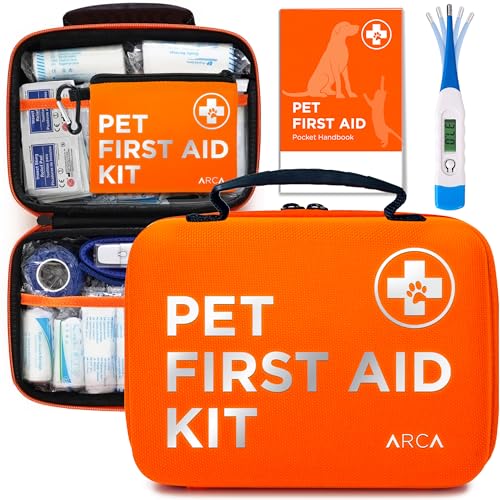
ARCA PET First Aid Kit
Typical Price: $36
Made for animals, not people. A compact kit built around pet injuries, small enough to clip to your pet’s bag or ride in yours.

Collapsible Pet Bowls (2-Pack)
Typical Price: $7
Food and water bowls that fold flat. Silicone bowls with clips, so they ride on the outside of a pack and take no room inside.
Round it out with a slip lead and a roll of waste bags with a dispenser. For cats, look for a collapsible carrier and a fold-flat disposable litter box.
ShopPet Carriers ShopDog Packs
Make a Pet Evacuation Plan
- Know where you’ll go. Identify pet-friendly hotels, friends or relatives, and shelters that accept pets, especially along your evacuation routes, before you need them (CDC).
- Set up a buddy. The CDC recommends a buddy system in case you’re not home: a trusted neighbor who can check on your animals and evacuate them if needed. Give them a key and tell them where the pet bag is.
- Practice with the carrier. A cat that only sees the carrier on vet day will fight it. Leave it out with a blanket inside so it’s familiar.
- Leave early. Pets make a fast evacuation slower. When officials say go, go.
- Keep them leashed or crated afterward. Familiar scents and landmarks change after a disaster, and pets get confused and lost. Even friendly animals can act differently under stress, so handle them carefully (CDC).
Pet Bug Out Bag Checklist
- Food (3 days in the bag, 2 weeks total) in a waterproof container
- Water (3 days in the bag, 2 weeks total)
- Collapsible bowls and a can opener
- Medications (2 weeks) and instructions; flea, tick and heartworm prevention (1 month)
- Vet records, microchip info and photos in a waterproof bag
- Collar with ID, leash, harness and a spare slip lead
- Carrier with a towel or blanket
- Pet first aid kit
- Waste bags or litter and a disposable litter box
- Paper towels, trash bags and disinfectant
- A familiar toy or blanket
Building a kit for the whole family? Our family bug out bag checklist covers the people, and the Build My Bag quiz lets you add pets and builds a list you can shop item by item.
Pet Bug Out Bag FAQ
How much food should be in a pet emergency kit?
The CDC recommends a 2-week supply of food and water for each animal. Keep at least 3 days in the grab-and-go bag.
Will an emergency shelter take my dog?
Many public shelters don’t accept pets other than service animals. Find pet-friendly hotels, friends or relatives, and pet-accepting shelters ahead of time.
What documents do I need for my pet?
Vet records including the rabies certificate, proof of ownership, recent photos, and your pet’s microchip number and company contact.
Should I microchip my pet?
Yes. The CDC calls it one of the best ways to be reunited if you’re separated. Keep the registration up to date.

Got a question about your bag?
Ask it in the Bug Out Bag Builder group on Facebook. Members share their builds, compare gear and help each other out.