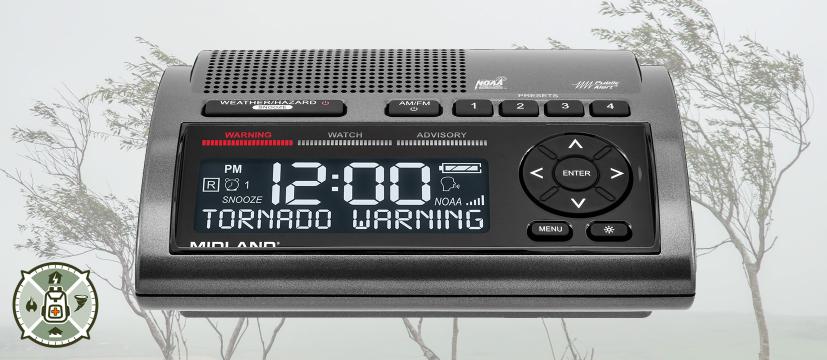
Best Emergency Radios for Preppers in 2026: The Midland Lineup Reviewed
Your phone is dead. The power is out. The cell towers are down or overloaded. It's 2 AM and you have no idea whether that storm is turning toward your neighborhood or moving away.
This is exactly the scenario an emergency radio is built for — and exactly the moment most people realize they don't have one.
As part of building a complete bug out bag, communications gear is one of the most overlooked categories. People spend hours choosing the right knife or flashlight and throw in a $12 radio from the checkout aisle as an afterthought. That's a mistake. When a major disaster hits, your emergency radio may be the only reliable source of information you have.
After years of testing communications gear in the field, one brand consistently rises to the top: Midland. Here's why — and exactly which model belongs in your kit.
Why You Need a Dedicated Emergency Radio
Before we get into specific models, let's talk about why a standalone emergency radio is non-negotiable in any serious preparedness kit.
Your phone will fail you in a disaster. Cell networks get overloaded within minutes of a major emergency. Towers go down. Power goes out and your battery drains. Even if your phone works, data and calls may be unavailable for hours or days. A dedicated emergency radio operates completely independently of the cellular network.
NOAA Weather Radio is the most reliable emergency alert system in the United States. The National Weather Service broadcasts continuous weather updates 24/7 on seven dedicated frequencies. More importantly, NOAA's SAME (Specific Area Message Encoding) system can be programmed to alert you only for your specific county — so you're not woken up at 3 AM for a tornado warning three states away. When a warning is issued for your area, your radio sounds an alarm automatically, even when the volume is turned down.
Grid independence is critical. The best emergency radios have multiple power sources — rechargeable battery, solar panel, hand crank, and standard AA batteries. That redundancy means your radio works on day one, day three, and day ten of a prolonged outage.
Why Midland?
Midland has been making communications equipment for over 60 years and is one of the most trusted names in emergency preparedness. Their emergency radio lineup has been independently tested and top-ranked by CNN Underscored, GearJunkie, and Ready Guidance in 2026 — consistently beating out competitors from Eton, Sangean, and others in real-world testing.
What sets Midland apart:
- Best-in-class NOAA reception — in side-by-side signal testing, Midland radios consistently outperform the competition on weather band pickup
- SAME county-level programming — available on their mid and top-tier models, so your alerts are actually relevant to your location
- Multiple power sources — rechargeable lithium battery, solar panel, hand crank, and AA battery backup on their flagship models
- USB phone charging — their top models can charge your phone in an outage, a feature that pays for the price difference immediately
- Proven durability — thousands of verified long-term reviews consistently report the same thing: Midland radios work when you need them and last for years
The Midland Emergency Radio Lineup: Which One Is Right for You?
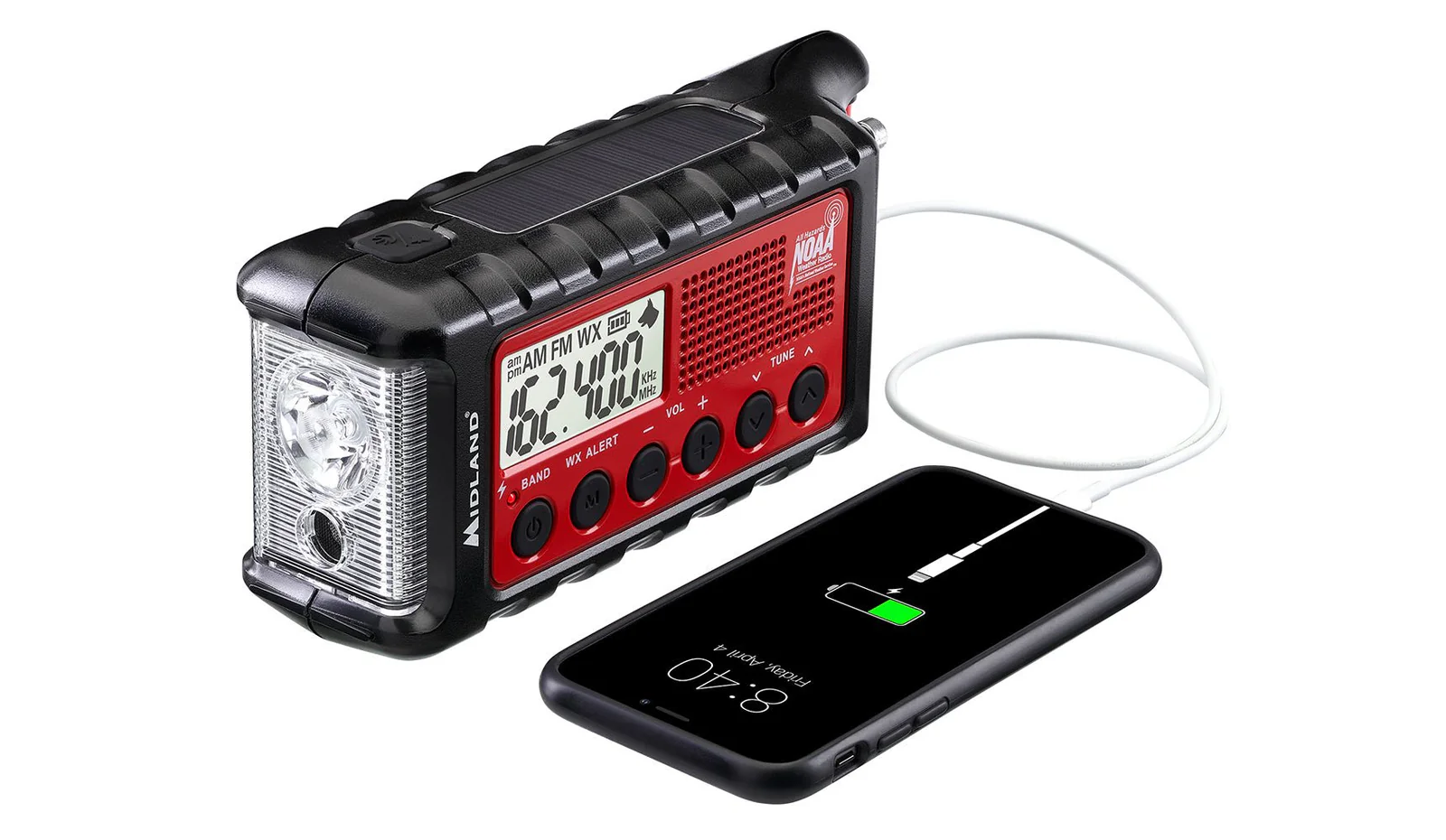
1. Midland ER310 — Best Overall, Best for Bug Out Bags
The ER310 is the gold standard for portable emergency radios in 2026, and it's the model I recommend most for bug out bags and home emergency kits. CNN Underscored named it the top emergency radio after testing 13 competing models. Here's why it earns that title:
- Four independent power sources: rechargeable lithium battery, built-in solar panel, hand crank, and six AA battery backup — this radio will work no matter what
- 2,600 mAh battery — up to 32 hours of runtime before you need to use backup power
- SAME county-level alert programming — set it once for your county and it only wakes you up when a threat is actually heading your way
- USB phone charging output — charge your phone from the radio's battery in a power outage
- All 7 NOAA weather band channels with automatic alert standby
- AM/FM reception for local news and emergency broadcasts
- Bright LED flashlight and SOS strobe
- Weather resistant construction
The one honest caveat: the hand crank charges slowly — about 26 minutes of listening time per minute of cranking. It's a backup power source, not a primary one. Keep spare AA batteries in your kit alongside it.
Price: ~$60–$70
Best for: Bug out bags, home emergency kits, primary emergency radio
→ Get the Midland ER310 at Midland
2. Midland ER10 — Best Compact Option
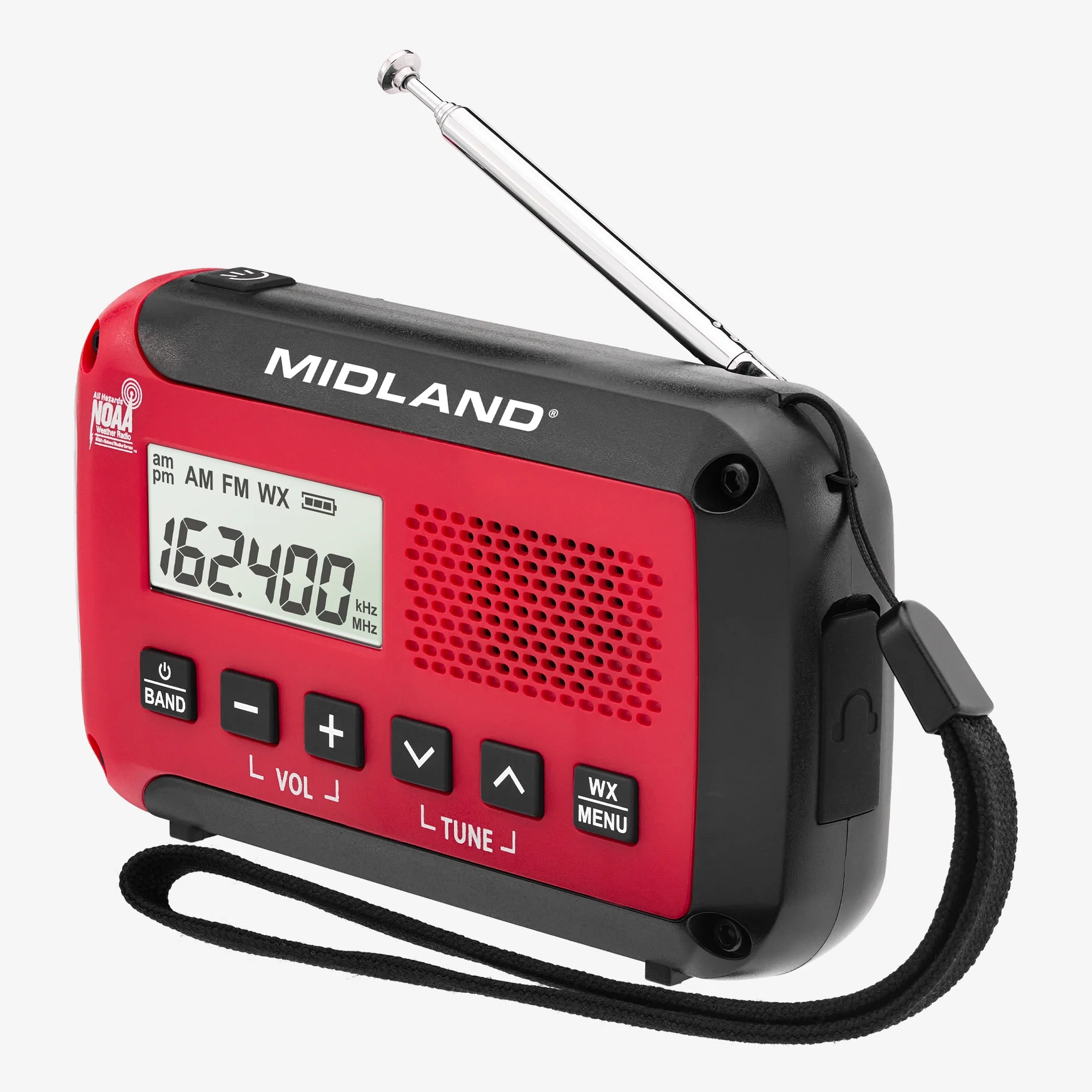
The ER10 is the ER310's smaller sibling and GearJunkie's top pick for an all-around emergency radio in 2026. It delivers nearly all of the ER310's functionality in a more compact, lightweight package — making it an excellent choice if you're watching pack weight or building a get-home bag rather than a full 72-hour kit.
- Three power sources: rechargeable battery, solar panel, and hand crank (no AA battery backup — the main difference from the ER310)
- 130-lumen SOS flashlight with strobe function
- Large backlit LCD display — readable in the dark
- USB phone charging output
- Attachment loop for clipping to a pack and charging via solar on the move
- NOAA weather bands with automatic alerts
The ER10 lacks SAME county-level programming and the AA battery backup of the ER310. For most people building a primary kit, spend the extra $20 and get the ER310. But if size and weight are a constraint, the ER10 is an excellent radio.
Price: ~$35
Best for: Get-home bags, lightweight kits, secondary location radios
→ Get the Midland ER10 at Midland
3. Midland WR400 — Best Home Base Radio
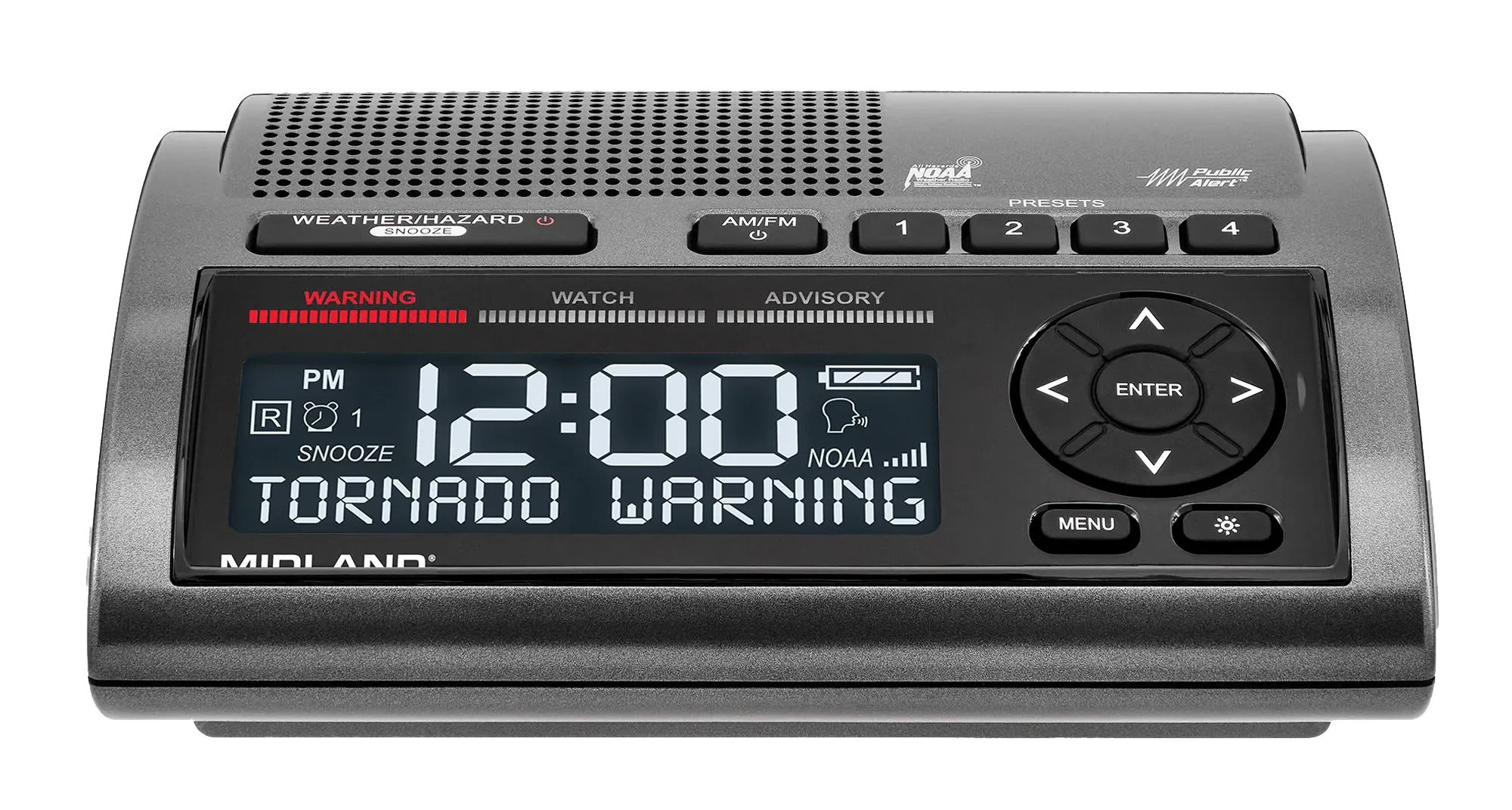
The WR400 is not a portable radio — it plugs into the wall and lives on your nightstand. What it does better than any portable radio is wake you up in the middle of the night when a threat is heading your way. It features SAME county-level programming and a loud alarm that will cut through a deep sleep.
- SAME county-level programming with customizable alert types
- Trilingual settings — English, Spanish, and French
- Alarm loud enough to wake a household
- All 7 NOAA weather band channels
- Large weather button for one-press access to current conditions
The WR400 requires a wall outlet — it's not for your bug out bag. Think of it as your home early warning system. Pair it with the ER310 in your kit and you have both bases covered: a stationary alarm at home and a portable radio to take with you when you evacuate.
Price: ~$50
Best for: Home base alert system, nightstand radio, primary residence
→ Get the Midland WR400 at Midland
How to Set Up SAME on Your Midland Radio
SAME (Specific Area Message Encoding) is the feature that takes your emergency radio from good to great. Without it, your radio alerts you for every warning in a broad region. With it, it only sounds when a threat is heading for your specific county.
Setting it up takes about two minutes:
- Go to weather.gov/nwr/counties and look up your county's SAME code (it's a 6-digit number)
- Hold the Alert button on your ER310 or WR400 until programming mode activates
- Enter your county code using the radio's controls
- Select which alert types you want to receive (tornado, flood, severe thunderstorm, etc.)
- Set the radio to Alert Standby mode — it will now monitor 24/7 and only alarm for your county
Do this the day you get the radio. Don't wait until a storm is coming.
Emergency Radio vs. Ham Radio: Do You Need Both?
This is a question I get a lot. The short answer: yes, ideally — they serve different purposes.
An emergency radio like the Midland ER310 is a receive-only device. It pulls in NOAA broadcasts and keeps you informed. It cannot transmit. It cannot communicate with other people.
A Ham radio like the BaoFeng UV-5R is a two-way communications device. With a license and proper programming, you can communicate with other operators, access repeaters, and coordinate with your group over distance. It cannot pull in NOAA weather alerts in the same reliable, automatic way a dedicated emergency radio can.
In a serious bug out kit, both have a role. The Midland keeps you informed. The BaoFeng keeps you connected.
What Else Should Be in Your Communications Kit?
A solid emergency radio is the foundation, but a complete communications loadout for your bug out bag also includes:
- Two-way radios (FRS/GMRS) for short-range group communication — Midland also makes excellent GMRS radios
- Ham radio for longer range — see our BaoFeng UV-5R guide for a full breakdown
- Backup power — a quality flashlight with long runtime keeps you operational at night. Our current favorite is the Fenix LD30 Renegade
- Written contact list and paper maps — when every device is dead, analog backups matter
The Bottom Line
If you don't have an emergency radio in your kit, the Midland ER310 is where to start. It's the most tested, most recommended portable emergency radio available in 2026, and at around $60 it's one of the highest-value purchases you can make for your preparedness setup.
Add a Midland WR400 to your nightstand and you have a complete home and mobile communications solution that will serve you through hurricanes, tornadoes, wildfires, and any other emergency that knocks out the grid.
Information is power. Make sure you can receive it no matter what.
Stay ready.
— Mr.BOBB