Should You Carry Night Vision in Your Bug Out Bag?
Updated November 2026: rewritten as an original, honest guide to night vision for preppers.
Night vision is one of those pieces of gear that sounds essential until you price it, weigh it and think about how you’d actually use it. Here’s our honest take on whether night vision belongs in a bug out bag, which kind makes sense, and what to buy first.
Quick answer: for most people, no, not yet. A good headlamp with a red light, a compass and a pair of binoculars come first. Once you have those covered and you expect to watch or move at night, an inexpensive digital night vision monocular is a reasonable add-on. Expensive tube-based night vision makes sense only for serious, trained users.

The Three Kinds of Night Vision
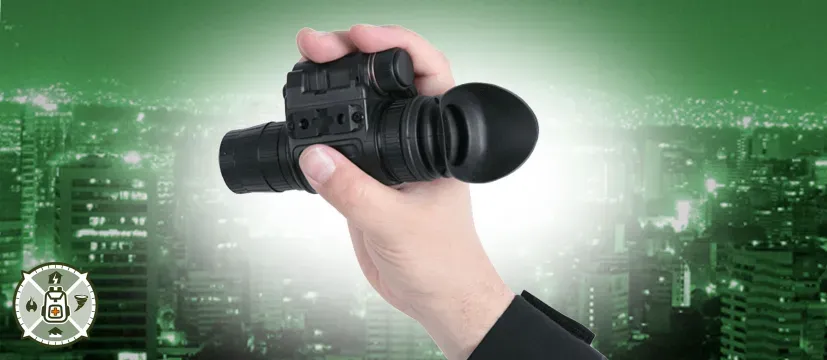
Digital Night Vision
Digital units use a camera sensor that’s sensitive to near-infrared light, plus a small screen. Most have a built-in infrared (IR) illuminator, a kind of flashlight your eyes can’t see but the camera can. They’re the most affordable option, many also work in daylight, and some record video.
The trade-offs: they need that IR light in very dark conditions, the screen can wreck your natural night vision, and battery life is often short.
Image Intensifier (Tube) Night Vision
This is what the military uses. A tube amplifies the tiny amount of light from the moon and stars, so it works without an illuminator and gives a much clearer, more natural view. You’ll hear about “Gen 2” and “Gen 3.” It’s excellent, and it costs thousands of dollars.
Thermal
Thermal imagers don’t need light at all. They show differences in heat, so a person or animal stands out against a cooler background, even in total darkness. They’re great for spotting people and animals, and poor for reading terrain or seeing detail.
Night Vision in a Bug Out Bag: Pros and Cons
What it’s good for:
- Watching your camp, car or home at night without giving away your position with a flashlight
- Checking out a noise before you walk toward it
- Spotting animals near camp
- Searching for a lost person or pet after dark (thermal especially)
What works against it:
- Weight and bulk. Every ounce in a bug out bag has to earn its place.
- Batteries. Another device to keep charged. Pick one that uses the same batteries as your other gear, or one you can charge from a power bank.
- Walking with it is hard. A single monocular gives you poor depth perception, so moving over rough ground at night takes practice.
- IR shows up. Anyone else with night vision can see your IR illuminator like a flashlight.
- Cost. The money for good tube night vision could buy a lot of other preps.
What to Buy First
- A headlamp with a red light mode. Red light helps keep your eyes adjusted to the dark. See our lighting guide.
- Binoculars or a monocular for daytime scouting. We like the Nocs Standard Issue 8x25.
- Night vision or thermal once the basics are covered.
If you do buy one, start with a compact digital monocular that runs on rechargeable batteries, and practice with it in your yard before you count on it.
Tips for Using Night Vision
- Give your eyes time in the dark to adjust before you judge what you can see without help.
- Close the other eye or cover it, then switch eyes to keep one adjusted to the dark.
- Keep the IR illuminator off unless you really need it.
- Check your state’s wildlife agency rules before using night vision or thermal for hunting. They vary a lot.
Night Vision FAQ
Is night vision worth it for preppers?
Only after the basics are covered. A headlamp, compass, map and binoculars matter more for most people.
Digital or tube night vision?
Digital is affordable and good enough for watching and spotting. Tube night vision is far better and far more expensive.
Is thermal better than night vision?
It’s different. Thermal is better for spotting people and animals; night vision is better for seeing terrain and detail.

Got a question about your bag?
Ask it in the Bug Out Bag Builder group on Facebook. Members share their builds, compare gear and help each other out.