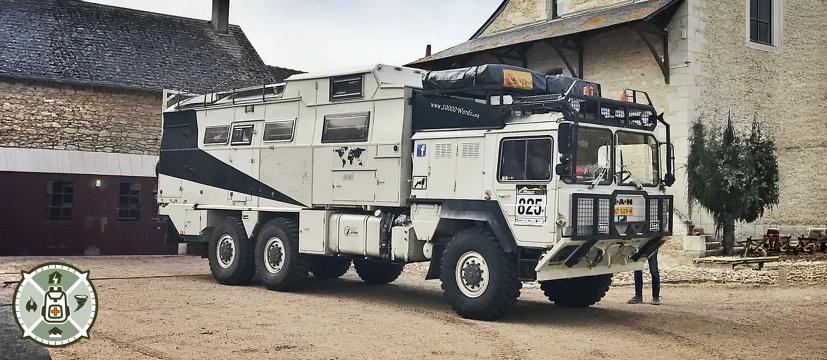
What to Look for in a Bug Out Vehicle
In an increasingly uncertain world, more families are planning for crises by investing in a "bug out" vehicle. These vehicles are meant to help you avoid danger and get through hostile conditions, whether that's a grid-down scenario, a regional disaster, or something worse.
Whether you're dealing with a natural disaster, civil unrest, or a longer-term crisis, a bug out vehicle needs to meet a few basic criteria to hold up under the demands of an extended emergency. If you haven't put together the bag that rides along with it yet, start there first — the vehicle is only half the plan.
Here's what we look for in a bug out vehicle. Your needs will vary, but this should get you thinking about the subject the right way.
1. Reliability and Durability
Reliability is priority one. Your bug out vehicle has to run smoothly under stress without constant breakdowns. Durability means it can take rough terrain and harsh conditions without racking up serious damage. Look for vehicles known for longevity and low maintenance needs.
Older models tend to score higher here — they just aren't built the way they used to be.
Suggested Models:
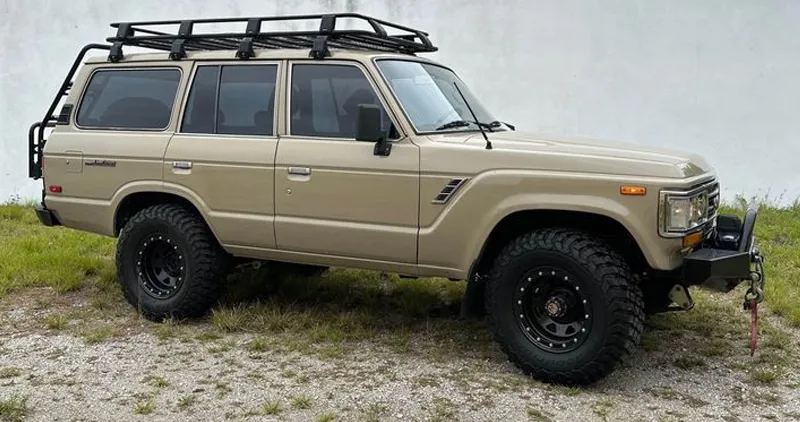
Toyota Land Cruiser: Known for exceptional reliability and the ability to handle rugged terrain. Mid-90s to early-2000s models often show up already decked out with the 4x4 gear you'd want — tires, lift, second battery, and more — for around $10k or so.
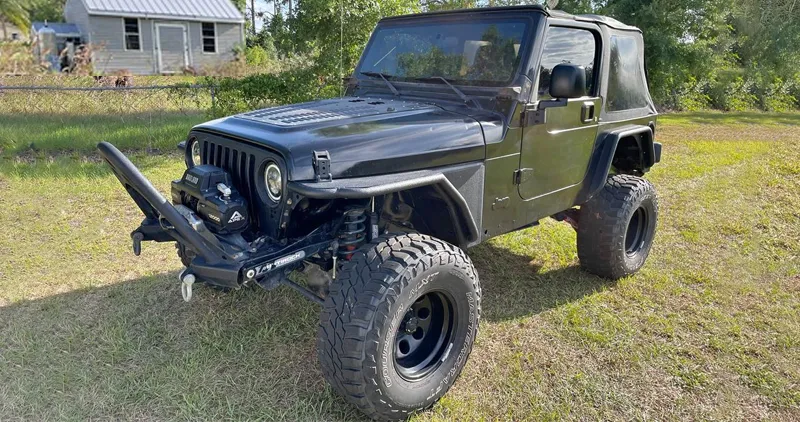
Jeep Wrangler: Almost too obvious to leave off this list, but it would be crazy not to mention it. Excellent off-road capability, a sturdy build, and thousands of accessories to turn it into anything you need, short of a boat. Cargo space runs small, but a good roof rack makes up the difference. The TJ series, built from '96 to '06, is probably the best blend of old-school durability and newer tech.
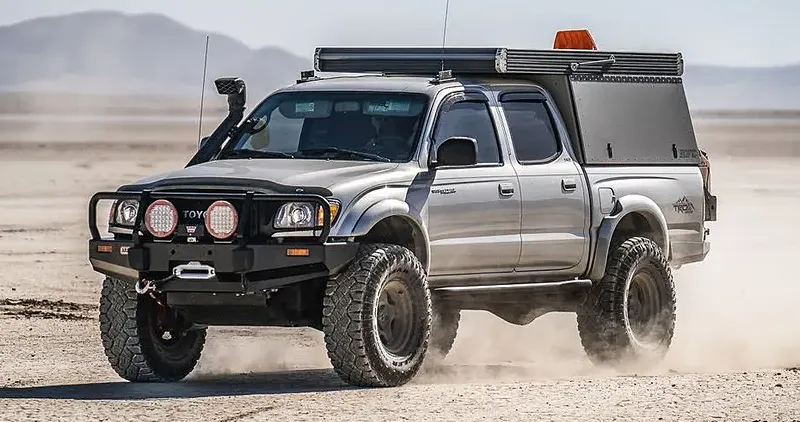
Toyota Tacoma: Not to get too Toyota-heavy here, but in my world Tacomas are everywhere. I've run Tacomas since 2003, and they're incredible machines — easy to work on (especially the earlier generations) and genuinely reliable. Not the biggest or most powerful trucks out there, but sometimes that's not what the job calls for. In places like Hawaii, big trucks just don't cut it, and can't get into the tight spots a Tacoma (or 4Runner) can. I prefer the Gen 1 and Gen 2 Tacomas.
2. Off-Road Capability
In a crisis, you may need to travel off the beaten path or on roads that have been badly damaged. A good bug out vehicle needs real off-road capability — ideally four-wheel drive, tall ground clearance, and a strong suspension system.
All-wheel drive is preferable to front- or rear-drive only. Some trucks offer locking front or rear differentials. "Lockers" add a lot to off-road performance — they force both wheels on an axle to spin at the same speed, keeping power distributed evenly regardless of terrain. That matters most when one wheel loses traction and the other needs to pick up the slack.
Tires
Tires are half the battle in off-road capability. Get all-terrain or dedicated off-road tires, and learn how to air them down so they grip better off-pavement. That means carrying a solid air compressor to air them back up once you're back on the road. Read up on airing down — even a non off-road vehicle benefits from it.
Full disclosure: if you buy anything through the links on this page, we may earn a small commission from the retailer at no extra cost to you. More info here.
Recovery Gear
Sometimes you just get stuck. The right gear fixes that fast. You'll want a variety of tow straps, kinetic recovery straps, soft shackles, and more — check our bug out bag essentials checklist for the packing list we build around.
Suggested Models:
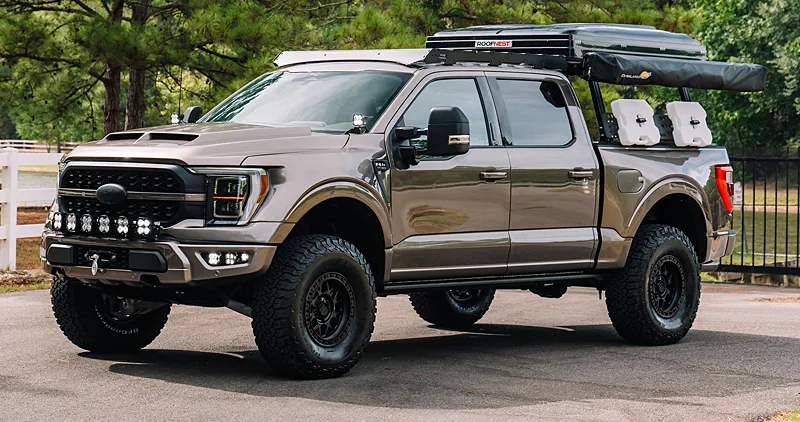
Ford F-150 Raptor: Ford's been building these since 2010 and is on its third generation as of this writing. A robust truck with a powerful engine and off-road prowess right out of the box — these are hard to beat. They aren't cheap, and being newer vehicles they'll need more specialized equipment to maintain, but they can drive through nearly anything. Watch a few YouTube comparison videos and you'll see what I mean.
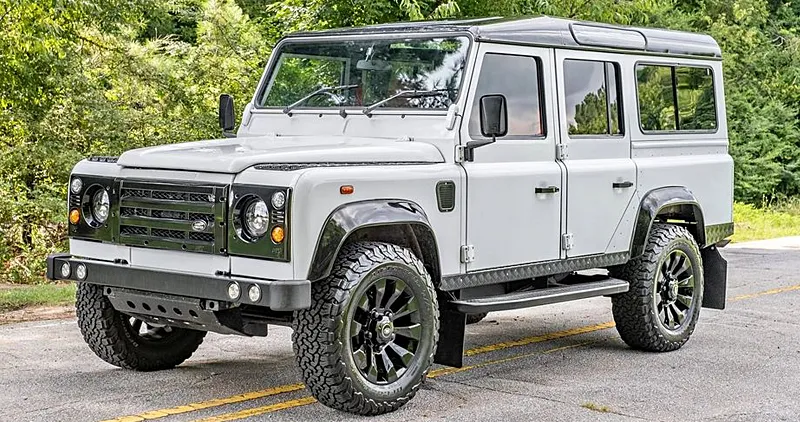
Land Rover Defender: World-renowned for off-road performance and versatility. The Defender lineup includes a few models available in the US, most notably the Defender 90, with some Defender 110s imported as well. These will cost you, and parts availability is worth researching before you buy.
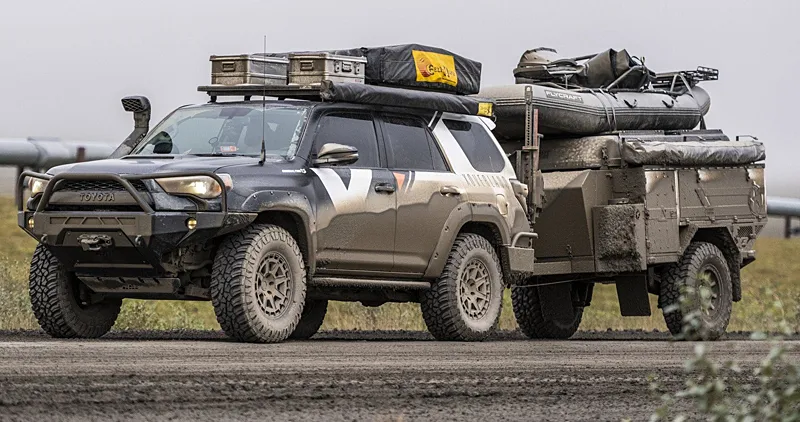
Toyota 4Runner: Another Toyota — it won't be the last one on this list. A great combination of reliability and excellent off-road features, and easy to upgrade into something exceptionally capable. Small and light enough to get into and out of nearly anything, yet roomy enough to haul what you need during a bug out. Older models run under $10k with 200k miles on them and still have plenty of life left.
3. Fuel Efficiency and Range
In a bug out situation, fuel access may be limited, so you have to balance fuel efficiency against range — and against the size of the tank itself. What's the vehicle's real-world range on a full tank? Can you carry extra fuel? Ten gallons is about two fuel canisters — how much further does that get you?
Consider models that strike a reasonable balance between power and fuel economy.
Suggested Models:
Subaru Outback: Decent fuel efficiency with some genuine off-road capability.
Honda Ridgeline: Combines good fuel economy with practicality and comfort.
Ford Escape Hybrid: Excellent fuel efficiency with hybrid tech — though that tech is expensive, harder to maintain, and can be tough to replace if it fails in a long-term scenario.
Toyota Prius: Kidding. Great mileage, but you'd basically be driving target practice.
4. Cargo Capacity
Sufficient cargo space is essential for hauling supplies, gear, and personal belongings. Look for vehicles with generous cargo areas, plus options for roof racks or cargo carriers.
Suggested Models:
Chevrolet Suburban: Massive interior space and cargo capacity.
Ford Expedition: Spacious interior with strong towing capability.
Toyota Sequoia: A full-size SUV with serious cargo room and Toyota reliability.
5. Flexibility and Versatility
A good bug out vehicle needs to adapt to different circumstances — the ability to sleep in it, tow extra supplies, and take on add-ons like winches, light bars, and auxiliary fuel tanks.
Suggested Models:
Ram Power Wagon: A versatile truck with real towing capability and off-road features.
Mercedes-Benz Sprinter 4x4: A favorite platform for full camper-van conversions.
Ford Transit AWD: Offers the space and versatility needed for a wide range of modifications.
6. Security Features
Security should never be an afterthought. Look for vehicles with solid safety features — airbags, anti-lock brakes, stability control, and modern driver-assistance systems (ADAS).
Suggested Models:
Volvo XC90: Top-tier safety features and a robust build.
Toyota Highlander: A range of safety technology paired with reliability.
Subaru Ascent: Numerous safety features and standard all-wheel drive.
Vehicle security is only one piece of it — the medical gap is the one most bug out plans miss. Most preppers have an IFAK in the vehicle but no real plan for an infection, a dental emergency, or refilling a daily prescription if the pharmacy isn't an option anymore. Jase Medical covers that gap with the Jase Case — a physician-prescribed kit of antibiotics for emergency use — plus a program for stockpiling your own maintenance medications. Worth keeping in the glovebox next to the trauma kit.
7. Ease of Upkeep and Parts Availability
In a crisis, fast repairs may be essential. Choose vehicles that are simple to maintain, with parts that are easy to find. A reputation for straightforward mechanical systems goes a long way.
For this reason, we tend to prefer vehicles made before 2004 — many were built with more user-replaceable parts. Fuel injection systems get complicated, but the rest of the vehicle's systems typically aren't.
Suggested Models:
Jeep Cherokee: Widely available parts and a straightforward mechanical layout.
Honda CR-V: Reliable and simple to maintain.
8. Secure Storage & Vehicle Organization
None of the above matters much if your gear is rattling around loose in the cargo area every time you hit a rut. A bug out vehicle needs a way to keep tools, electronics, and recovery gear organized, protected, and ready to grab in the dark.
This is where a hard case earns its keep. Aluminum transport cases keep dust and moisture out, stack securely so nothing shifts in transit, and protect anything sensitive — radios, optics, first aid supplies — from the kind of abuse that comes standard with off-road travel. Zarges USA's case lineup is built for exactly this: precision-engineered aluminum construction that's been trusted across military, aerospace, and overlanding use for decades. A couple of stackable cases in the cargo area does more for your organization — and your gear's survival — than another loose duffel bag ever will.
If you're outfitting the vehicle with a radio setup, pair a hard case with our BaoFeng radio guide to keep your comms gear protected and dialed in before you need it.
Conclusion
Choosing the right bug out vehicle takes careful thought across several factors: reliability, off-road capability, fuel efficiency, cargo capacity, versatility, safety, ease of maintenance, and how well you can organize and protect what you're carrying. Vehicles like the Toyota Land Cruiser, Jeep Wrangler, and Ford F-150 Raptor mentioned above offer a strong mix of these traits, making them solid candidates for a bug out role. Pick a vehicle that meets these criteria and you've meaningfully improved your odds of getting through an emergency in one piece.
For more on building out the rest of your emergency plan, check our further reading library.