Prepper Nutrition: How to Plan Calories, Protein and Vitamins for an Emergency
Updated November 2026: rewritten with official calorie, vitamin and food-safety guidance, a layered food plan and our current emergency food picks.
Most preppers can tell you how many days of food they have stored. Fewer can tell you whether that food will keep them strong after the first week. Good emergency nutrition comes down to three things: enough calories, the right mix of fuel, and a few vitamins that don't run out on you. Here's how to plan all three for your home and your bug out bag.
Quick answer: Plan for about 2,000 calories per adult per day, and more if you'll be hiking with a pack. Mix fat, protein and carbs, and make sure you have a daily source of vitamin C. Store at least several days of non-perishable food your family will actually eat, plus a gallon of water per person per day.
How Many Calories Do You Need in an Emergency?
Calories are your body's fuel. In an emergency you're often more active than usual: hauling water, clearing debris or walking with a loaded pack. This is the wrong time to diet.
| Who | Calories per day |
|---|---|
| Adult women (19 to 59) | 1,600 to 2,400 |
| Adult men (19 to 59) | 2,200 to 3,000 |
Ranges from the 2020–2025 Dietary Guidelines for Americans, as summarized by the American Academy of Family Physicians. The low end is for sedentary adults and the high end is for active ones.
If you're bugging out on foot, plan toward the top of your range. A 72-hour bag for one adult works out to roughly 6,000 to 9,000 calories. See our 72-hour food supply guide for what that looks like in real food.
Where Calories Come From: Carbs, Protein and Fat
Every calorie you eat comes from carbohydrates, protein or fat. According to the USDA Agricultural Research Service, protein and carbohydrates provide about 4 calories per gram and fat provides about 9.
| Fuel | Calories per gram | What it does | Shelf-stable sources |
|---|---|---|---|
| Carbohydrates | 4 | Fast energy for hard work | Rice, oats, pasta, crackers, dried fruit, honey |
| Protein | 4 | Repairs muscle and keeps you full | Canned meat and fish, jerky, beans, lentils, powdered milk |
| Fat | 9 | The most energy per ounce | Nut butters, nuts, oils, hard cheese, ration bars |
What this means for your bag: fat packs more than twice the calories into each ounce, so calorie-dense foods like nut butter and ration bars keep a bug out bag light. You still need the same total calories, though, and you need carbs to fuel hard physical work. Aim for a mix of all three rather than loading up on any one.
Vitamins and Minerals: What Runs Out First
For a short emergency of a few days, calories and water matter far more than vitamins. In a longer one, gaps start to show. Vitamin C is the classic example: the NIH Office of Dietary Supplements says signs of scurvy can appear within a month of getting less than about 10 mg of vitamin C a day. Adults need 75 mg (women) to 90 mg (men) daily.
- Store a vitamin C source: freeze-dried or canned fruit, fortified drink mixes or vitamin C tablets.
- Consider a basic multivitamin in your long-term storage to cover gaps when fresh food runs out.
- Don't megadose. More isn't better. If you take medications or have health conditions, ask your doctor or pharmacist what makes sense for you.
Don't Forget Water
Food is useless without water. Many emergency meals are freeze-dried and need water to prepare, and your body needs water to digest them. Ready.gov recommends one gallon per person per day for several days, for drinking and sanitation. When water is limited, go easy on very salty foods, because they make you thirstier. See our water filter and container picks.
Build Your Food Supply in Layers
One kind of food can't cover every situation. We plan ours in three layers:
- Bug out bag (72 hours): light, calorie-dense, no-cook food. Ration bars, nut butter packets, jerky, trail mix and a few freeze-dried meal pouches if you carry a stove and water.
- Home short-term (2 weeks): canned and boxed food you already eat, rotated through your pantry. Ready.gov says to keep canned food in a cool, dry place, store boxed food in tightly closed plastic or metal containers, and keep a manual can opener with it.
- Long-term (months to years): freeze-dried food in #10 cans and buckets with long shelf lives. See how to store food for 6 to 12 months.
Tips that make a real difference
- Store what you eat, and eat what you store. A crisis is a bad time to find out your kids won't touch a food. Rotate pantry items before they expire.
- Plan for special diets. Ready.gov reminds families to remember any special dietary needs. Think infants, food allergies and medical diets.
- Pack comfort food. Ready.gov lists comfort and stress foods as part of an emergency supply. Hard candy, coffee or a favorite snack helps morale more than you'd think.
- Cook safely. Ready.gov warns that charcoal grills and camp stoves are for outdoor use only.
- Know when to toss food after an outage. Ready.gov says refrigerated food should be safe if the power was out for no more than four hours. Throw out perishables like meat, poultry, fish and eggs that have been above 40°F for two hours or more.
A word on wild food
Don't plan on foraging to fill the gaps. Some plants and mushrooms are deadly in small amounts, and "taste tests" for edibility are not a safe shortcut. Never eat a wild plant or mushroom you can't identify with certainty. Stored food is the plan; foraging is a skill to learn slowly with an experienced guide.
Our Emergency Food Picks
Our top choice for long-term storage is Nutrient Survival. Their meals are made in America, built around protein instead of filler, and designed to be made with just water, hot or cold. For the full breakdown, see our Nutrient Survival picks.
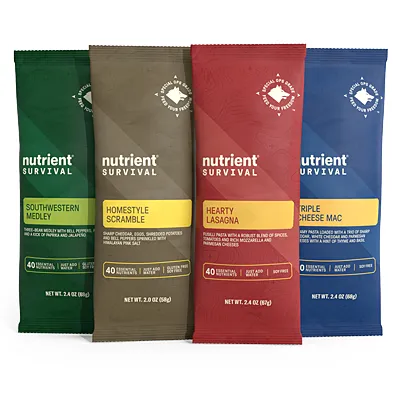
Nutrient Survival Protein Meal Sampler
Start here. A few single meals so you can find out what your family will actually eat before you buy in bulk. Each meal has 12 grams of protein.
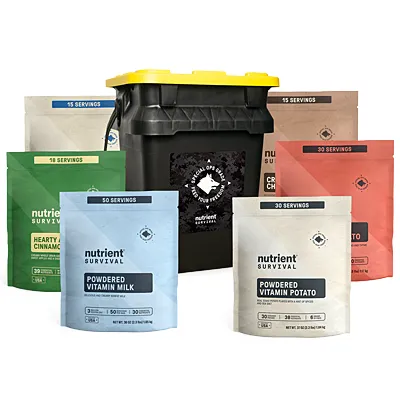
Nutrient Survival Blackout Basics Bucket
Best for a power outage. A 14-day supply (158 servings) in one bucket that stacks in a closet. It covers the “home short-term” layer of your plan.
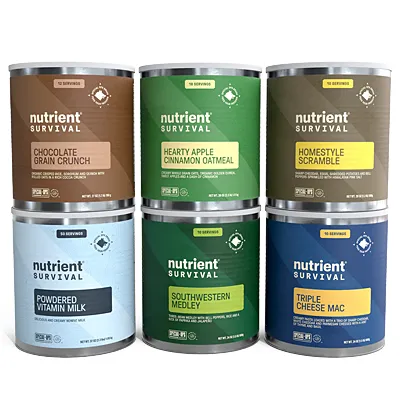
Nutrient Survival 14-Day Emergency Food Kit
Best for long-term storage. 110 servings and 20,240 calories, built around protein, for the “months to years” layer of your plan.
For a bug out bag, you want food that needs no cooking and no water. These two are easy to find on Amazon:
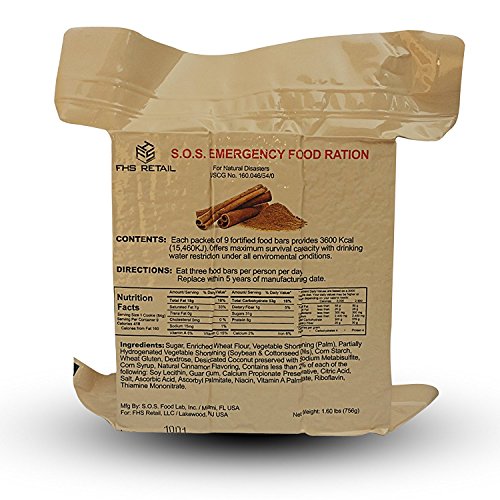
S.O.S. Emergency Food Rations, 3600 Calories
Typical Price: $22
Best for a bug out bag. Dense, no-cook ration bars that need no water to eat and hold up in a hot car or a pack. One package covers an adult for a day or more.
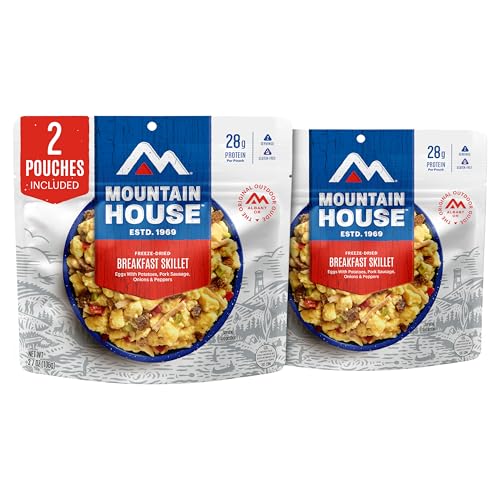
Mountain House Freeze-Dried Breakfast (4 Servings)
Typical Price: $22
Best hot meal. Just add boiling water to the pouch. Light enough to pack and a real morale boost on a cold morning, if you carry a stove and water.
Prepper Nutrition FAQ
How many calories should I store per person per day?
Plan on about 2,000 calories per adult per day as a baseline. The Dietary Guidelines put most adults between 1,600 and 3,000 depending on sex and activity, so active adults and anyone walking with a pack should plan toward the high end.
Is fat better than carbs for emergency food?
Fat has more than twice the calories per gram (9 versus 4), so it keeps a bug out bag light. But your body still needs carbs for hard work and protein for repair, so a mix of all three is best.
Do I need vitamins in my emergency food supply?
For a few days, no. For anything longer than a couple of weeks, store a vitamin C source and consider a basic multivitamin. The NIH notes scurvy symptoms can appear within a month of very low vitamin C intake.
How much food should go in a bug out bag?
Three days of food for each person, which is roughly 6,000 to 9,000 calories for an adult. Favor no-cook, calorie-dense food like ration bars, nut butter and jerky.
Can I live off wild plants if my food runs out?
Not safely without real training. Many wild plants are low in calories, and some are poisonous. Store enough food that foraging is never part of the plan.

Got a question about your bag?
Ask it in the Bug Out Bag Builder group on Facebook. Members share their builds, compare gear and help each other out.