Get Home Bag: Car Emergency Kit Checklist
Want this get home bag sized for your family, your weather and your budget? Answer 5 questions and get a complete, priced list with a reason for every item.
Build my bag › See the full list ›
The full list shows every item at three budgets (Essentials, Solid and Best) with today's Amazon prices.
Updated November 9, 2026
Play It Out: Survival Scenarios

Could you walk home from work? Our free Get Home Drill is fun to play and takes about five minutes: seven calls between your desk and your front door during a regional blackout, then your score, your gaps and a printable family plan.
Get Home Bag Checklist
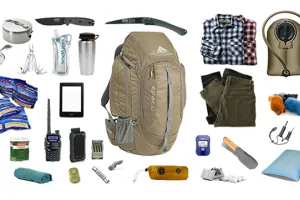
A get home bag is a small emergency kit you keep in your car or at work, so you can make it home on foot if the roads close, the power goes out or your car won't start. Plan for about 24 hours and a long walk, and keep it light enough to carry all day: well under 30 lbs.
Water & food
- 1 to 2 liters of water
- Filter bottle or water filter
- Energy bars and snacks for a day
Clothing
- Socks, a warm layer, hat and gloves
- Rain poncho
- Broken-in walking shoes (if you work in dress shoes)
Light & power
- Headlamp and spare batteries
- Power bank and phone cable
- Light sticks
First aid & hygiene
- Small first aid kit and blister care
- A day or two of your medications
- Wipes, hand sanitizer, sunscreen
Navigation & comms
- Paper map of your route home
- Compass and whistle
- Small radio
Protection
- N95 or P100 respirator and goggles
- Work gloves
- High-visibility vest
Tools
- Knife or multitool
- Paracord and duct tape
- Lighter
Shelter & money
- Emergency blanket or bivvy
- Cash in small bills
- Emergency contacts on paper
In the car itself, keep jumper cables or a jump starter (more on that below). Want the full list sized to you? Answer 5 questions and we'll build it with today's prices and weights.
Get home bag vs. bug out bag
| Get home bag | Bug out bag | |
|---|---|---|
| Job | Get you back home | Get you away from home |
| Where it lives | Your car or workplace | At home, by the door |
| Plan for | About 24 hours | 72 hours to a week |
| Size | Small backpack, built for walking | Larger pack or rolling bag |
On this page:
- Get home bag checklist
- Get home bag vs. bug out bag
- What is a get home bag?
- Jump starting your car
- Full contents with gear picks
- Car kit + backpack
- Best get home bag backpacks
- FAQ
What Is a Get Home Bag?
A Get Home Bag is an emergency bag meant to protect you when away from home. Think of it as a 24-Hour Bug Out Bag.
However unlike a larger Bug Out Bag, a Get Home Bag is meant to be ultra-portable and compact and help you be prepared for shorter duration emergencies.
At a minimum it should help provide you with water, snacks, a change of clothing and a first aid kit. You should have items that would make it more comfortable to sleep if you wind up on a floor somewhere for a night or two.

We think of prepping a Get Home Bag as an emergency bag for your car or truck.
Some people keep one at their job. If you are a bus or train commuter then this might be an option if you also have your own desk or locker at work.
Don't go overboard! It is easy to get carried away and try to make a Get Home Bag a full-blown Bug Out Bag. Avoid this temptation if possible. You want your GHB to be lightweight and low drag, so you can stay maneuverable on foot.
What Should A Get Home Bag Do?
The name gives you an idea, it is supposed to help get you back to your home, back to your family should you suddenly find yourself in a situation that makes return home difficult.
Here's some examples of events like these: a large scale terrorist attack (ie. 9-11) or giant solar flare with large Electro Magnetic Pulse, knocking out power for hundreds of miles around.
A biological or chemical attack, a train carrying toxic chemicals, an explosion at a nearby plant; all of these could cause sudden area wide evacuation events.
In both scenarios the only transportation available to people will be their feet. So getting back to the bag weight, make sure not to exceed 30 lbs if possible, and practice hiking with it a few times to see how it feels and how your body reacts.
They are not typically meant to be a deep woods survival kit (unless that is what you would need it to be in order to get home.)
Jump Starting Your Car
You should always have a dedicated set of jumper cables in your vehicle. If you have more than one car there should be a set in every car/truck you have. It's cheap insurance. We prefer the 2 gauge cables but 4 gauge cables will do (get at least 20 foot long cables.)
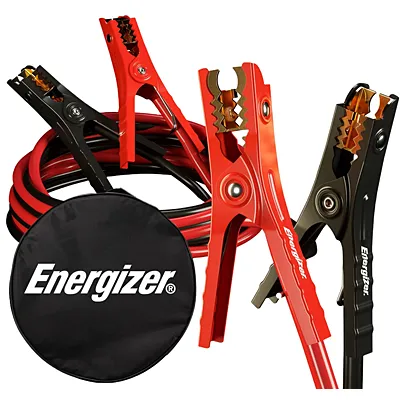
Here's the 4 ga 20 ft jumper cables available on Amazon. $30 should be all you need to spend on them. Don't cheap out and get the shorter, thinner cables - get a set you can rely on.
Jumper Batteries
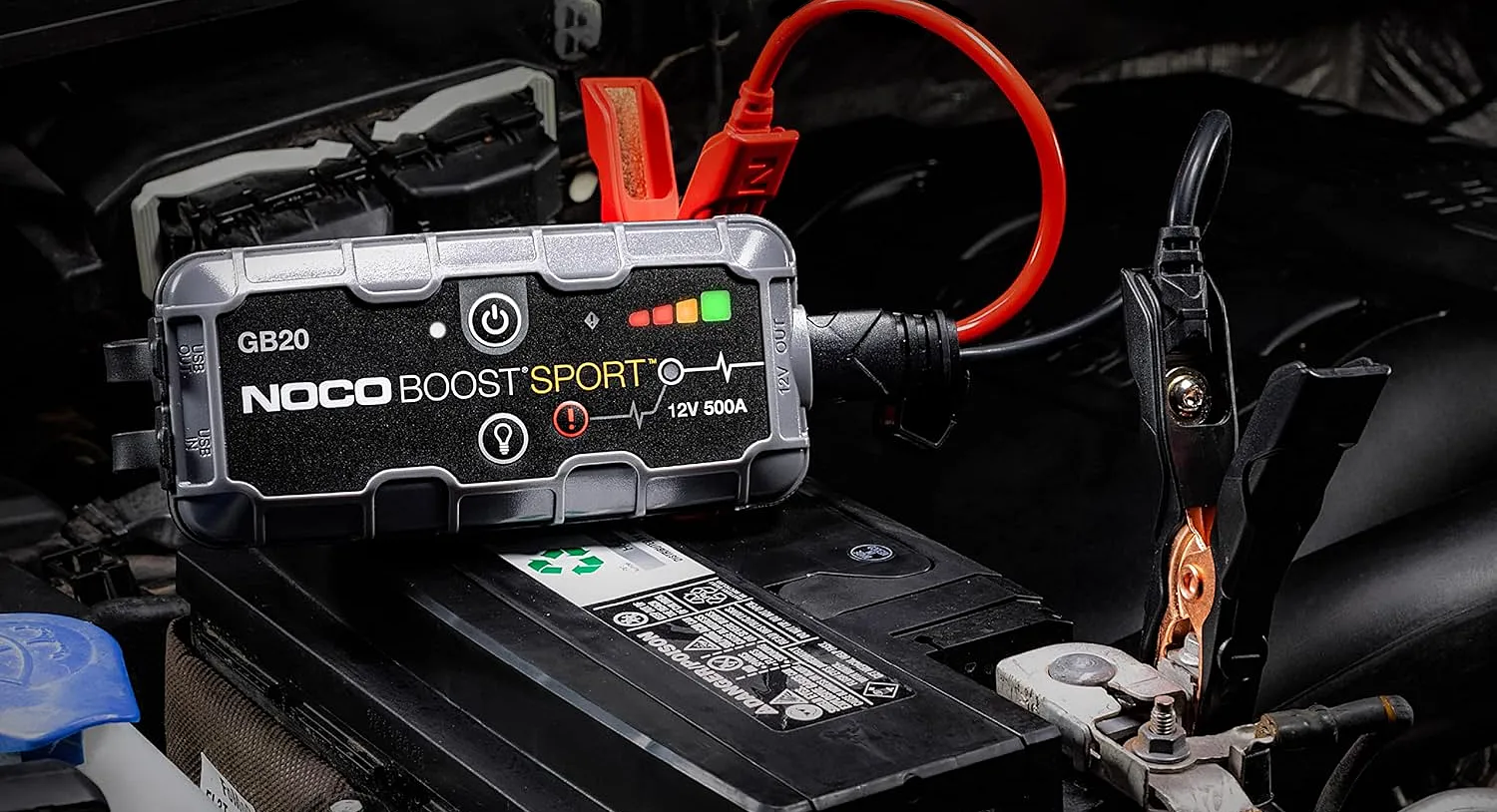
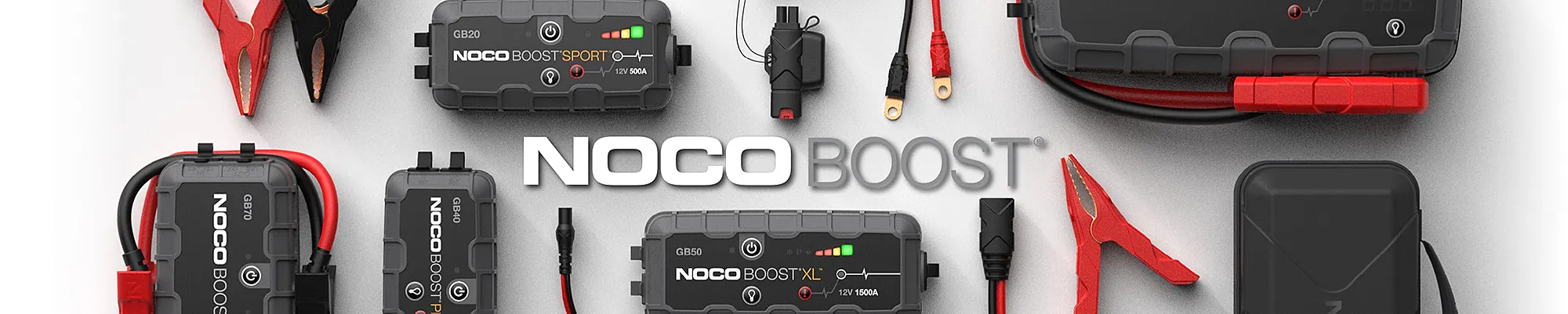
We have a newer vehicle that has some kind of vampiric draw to it - the battery dies constantly despite changing it every few years. For that reason we have decided to upgrade to a NOCO Boost portable 12V Lithium Battery Booster Pack / Portable jump start battery.
It's been a game changer. When the battery dies, we just attach this to the positive terminal and negative terminal (if you can access the negative terminal - in some vehicles you'll need to look for an unpainted surface or screw near your battery and use that as your ground for the negative terminal) turn it on and wait a minute then crank the engine up. The tech works great and it's really simple to use.
There are different sizes depending on the size of your engine. If you have a 4 liter engine, the 500 amp battery is more than enough and they are currently running at about $80. If you have a 6 liter engine you're looking at $100, and it goes up from there.
Check out the NOCO Store for more information.
Get Home Bag Contents
Clothing:
- A pair of socks, pants, shirt, shorts and underwear in a compression sack
- Extra pair of prescription glasses and/or sunglasses
Sleep Kit:
Food & Water:
Environmental Protection:
Wildfire smoke, chemical spills from derailments
- Impact Resistant Goggles
- 3M P100 Respirator (good)
- 3M 6200 Respirator + 60926 Filters (better)
- Mechanix Brand Gloves
Hygiene & First Aid:
- Badger SPF 35 Sunscreen
- Lava Heavy Duty Hand Cleaner
- Purell Hand Sanitizer + Add to bag~$15 · 1 oz
- Toothbrush, toothpaste, deodorant
- Surviveware Biodegradable Wet Wipes and Camper's Toilet Paper
- First Aid Kit
Tools:
- Silky Gomboy Saw < This one item gets used more than any other in our kits!
- Fenix HL45R Headlamp
- Morakniv Companion Fixed Blade Knife
- 100 Feet of 550 Paracord + Add to bag~$13 · 7.2 oz
- High Visibility Reflective Vest
- Cyalume Light Sticks + Add to bag~$17 · 9.6 oz
- Map(s) of local area
- A few pairs of nitrile gloves (for medical/mechanical work)
Emergency Communications:
- Coms & Navigation Kit
- SE Lensatic Compass + Add to bag~$12 · 3.7 oz
- UST JetScream Whistle + Add to bag~$11 · 0.3 oz
- UST StarFlash Signal Mirror Find one in the builder ›
Shelter & Weather Protection:
Upgrades / Additions:
- ESEE Izula Knife
- Pandemic Kit
- AMK SOL Emergency Bivvy + Add to bag~$31 · 4.5 oz
- UST SplashFlash LED Light + Add to bag~$19 · 1.3 oz
- Baofeng UV-9R Plus Radio (2-Pack) (how to program your radio)
- USB Smart Charger Cable for BaoFeng
Car Kit + Backpack: Why We Use Two Bags
Over time, our thinking about Get Home Bags has changed, and the way we do ours now is a two bag setup.
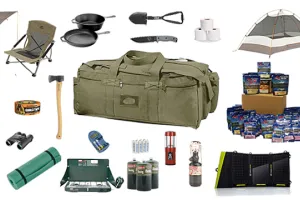
The first kit is a full time car kit, which carries items in it that we might need from day-to-day, and that aren't affected by the heat and cold: saws, knives, lights, tarps, shelter, pens, clothing, etc.
We prefer using bags like the 5.11 Wingman Patrol Bag or the Maxpedition Centurion Patrol Bag for this kit: they are easy to keep organized since they provide tons of pockets, and they sit flat and square, making them easy to pack around in the trunk.

Wingman Patrol Bag
Typical Price: $104 Size: Large - 39 Liter
Pros: The Wingman is designed to ride in the passenger seat with the upper panel fastened around the headrest, serving as an organizer, tool kit, and tactical bag.
Featuring dual-fold open web platforms, a foldout organizer panel, adjustable main compartment divider, mesh pockets, and almost limitless storage options, the Wingman Patrol Bag will keep your gear stable, secure, and within easy reach.
Cons: Easy to load up with heavy gear, harder to carry long term should you have to ditch your vehicle.
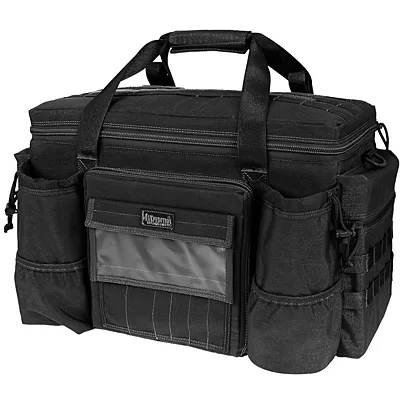
Maxpedition Centurion Patrol Bag
Size: Large - 42 Liter
Pros: This is just an incredible bag. It will hold everything you would need and keep it neatly organized in a durable and well built way. We have 2 of these, one for each vehicle. It can hold the heavy stuff with no problem and because its construction is reinforced it doesn't collapse in on itself.
23"(L) x 12"(W) x 13"(H)
Cons: Pricey, but it is the top of the line and you very likely won't be disappointed with the quality.
Get Home Bag Number 2
Our second bag is a backpack - and this we take in and out of the car with us and don't bring along unless we are going several miles away from home.
This bag carries: medical supplies, backup lithium batteries, food and water - since these items can be impacted by excessive heat or freezing.
The Best Get Home Bag Backpacks
Here is a list of the bags we think are the best types to make a Get Home Bag with. If you already have something at home, great, use that. Just make sure it is sturdy though, and not going to fall apart on you when you need it most!
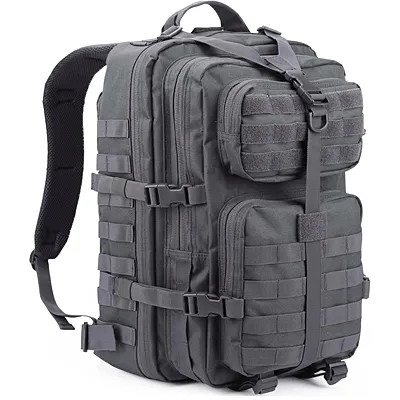
REEBOW Gear Military Tactical Backpack
Size: Large - 40 Liter
Pros: Man you don't get much these days for less than $50, but you can grab a Reebow pack. Based on a time-tested proven design, this pack has all the elements of a high-end pack for a fraction of the price. You even get a waist belt and compression straps.
The Amazon rankings on this pack are just bonkers, at the time of writing 4.7 out of 5 stars on 24k reviews. You don't hit those numbers if you are selling an inferior product.
13" x 20" x 11"
Cons: Materials and construction are what gets you to low costs, so expect zippers and seams to eventually fail with heavy use but at $29 you can hopefully afford a backup if you need it.

High Sierra Loop Backpack
Typical Price: $44 Size: Small - 29 Liter
Pros: The best bang for your buck. Tons of space, well designed, low-profile. A huge variety of colors available. It has all the functions some of the high-end packs have for a tenth of the price.
I travel a lot and I see these bags everywhere!
Our first choice for beginner Bug Out Bag Builders. Definitely a contender for your kids bags. It can be filled with stuff and isn't to heavy in and of itself.
13.5"(L) x 19"(H) x 8.5"(W) at 1.4 lbs.
Cons: Not the most durable pack. You are getting what you pay for here to be certain but if you need to keep costs low and only plan to use these bags in an emergency than this is a great option in our opinion.
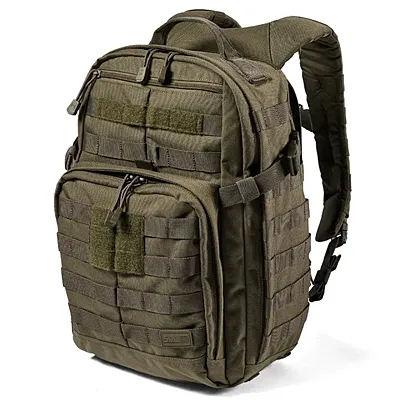
5.11 Rush 12 2.0
Typical Price: $88 Size: Small - 24 Liter
Pros: If you want an awesome pack that will be comfortable to wear for long periods and is built tough with excellent stitching and materials, look no further than the Rush series of packs from 5.11. The Rush 12 is on the small side, but if you go with a 2 bag system in the way we discussed above then you probably won't need a huge backpack anyway.
Cons: No built-in hydration holders on the side. No big issue, just get one from Amazon. I would add a phone case as well on the other side to make accessing it easier.
Packing Your Get Home Bag
Organize a GHB as you would any other emergency bag.
It is best to keep things compartmentalized by use, so if you can pack things into clear seal-able bags or into pouches with labels on them then do so. For example, put all your fire making items, matches, lighters, etc. into one bag so if you need it you can grab it all out at once.
This also serves a dual purpose, you are adding water repelling protection to the contents inside the bag should your bag leak in a downpour.
Make the first aid kit easily accessible. It's the item you will need the most often, especially for boo-boo stuff.
Get Home Bag FAQ
What is a Get Home Bag?
A Get Home Bag (GHB) is a compact emergency kit for short-term survival away from home, including water, snacks, clothing, and a first aid kit. It's often stored in your car or at work for quick access during crises.
What is the purpose and duration of a Get Home Bag?
It's designed for about 24 hours to help you return home during emergencies like storms, power outages, floods, or threats. The goal is safe navigation back to family when travel is disrupted.
How does a Get Home Bag differ from other emergency bags?
Unlike a larger Bug Out Bag for long-term evacuations, a GHB is lightweight (under 30 lbs) and focused on short-term mobility, not deep-woods survival.
Why do I need a Get Home Bag?
It provides essentials for foot travel if transportation fails due to disasters, attacks, or evacuations, ensuring comfort and safety on the way home.
What essential items should I include in a Get Home Bag?
Include water and food (packets, bars), clothing (change of socks, pants, shirt), first aid kit, lighting (flashlights, lighters), weather protection (rain gear), visibility items, sleeping aids (blanket), and extras like maps or batteries. For vehicles, add jumper cables and a portable battery.
What is the recommended setup for a Get Home Bag?
Use a two-bag system: a car kit for durable items (tools, shelter) and a backpack for sensitive ones (food, meds). Affordable options include REEBOW Gear ($29) or 5.11 Rush 12 ($110).
How should I organize and maintain a Get Home Bag?
Compartmentalize items in labeled, sealed pouches for easy access. Test with practice hikes, update seasonally, and keep weight low for mobility.
What common mistakes should I avoid?
Don't overload it into a full Bug Out Bag; keep it under 30 lbs. Avoid forgetting to test or update contents regularly.
Next Step: Build A Bug Out Bag

Got a question about your bag?
Ask it in the Bug Out Bag Builder group on Facebook. Members share their builds, compare gear and help each other out.
Up Next