Water Safety
Updated November 2026
Heading out on the water? Build the overboard bag that leaves the boat with you: beacon, floating radio, distress signals and water, sized for your crew.
Most of my first-responder training comes down to one idea: the best emergency is the one that never happens. On the water that is truer than anywhere else. Help is farther away, the water is colder than it looks, and the mistakes that kill people are almost always the same handful of mistakes.
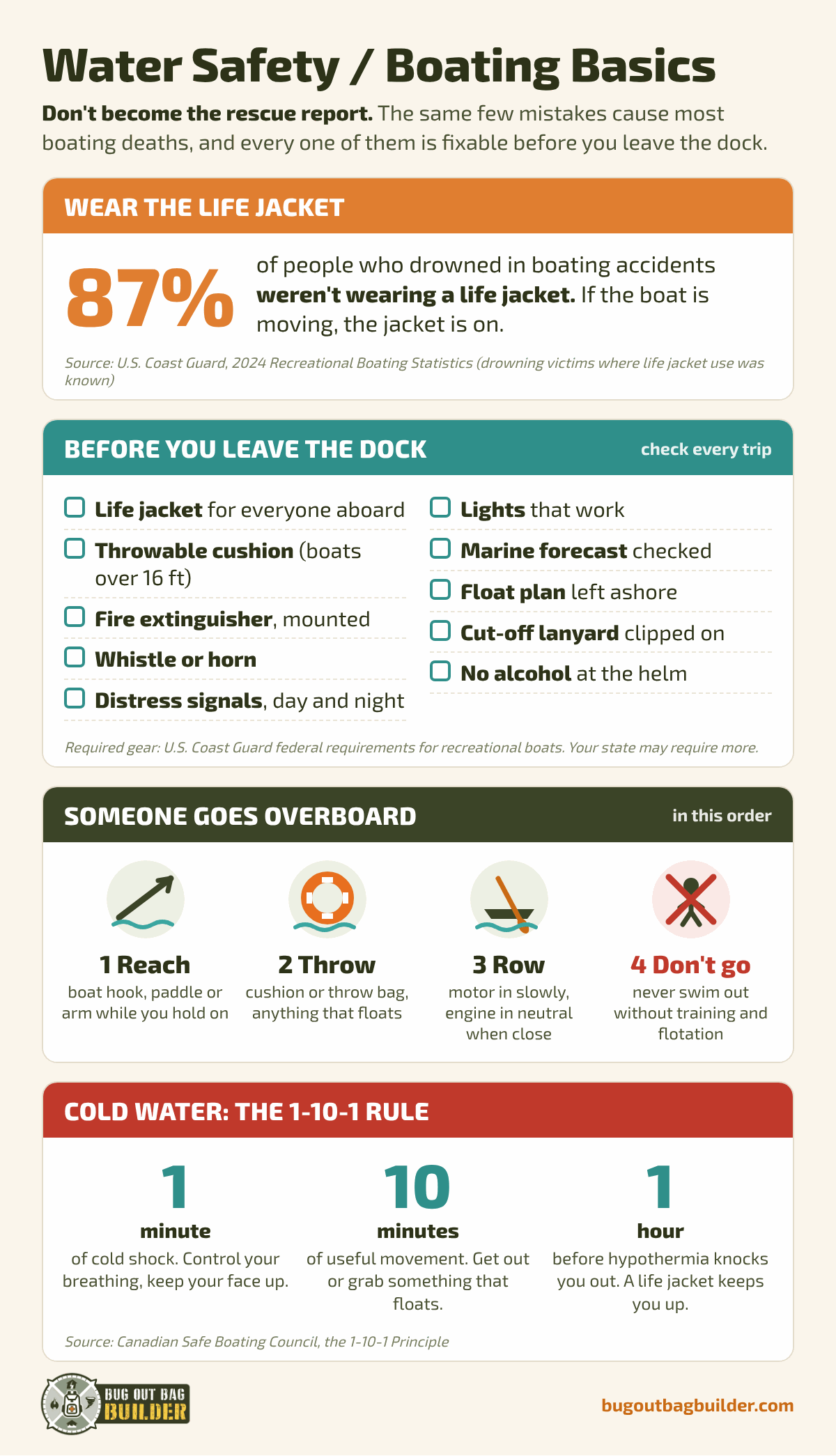
The Coast Guard's own numbers make the point. In 2024, 76% of boating deaths were drownings, and 87% of the people who drowned were not wearing a life jacket. Alcohol was the leading known factor, and 69% of deaths happened on boats where the operator had never had boating safety instruction (U.S. Coast Guard, 2024 Recreational Boating Statistics). Those are fixable problems, and this page is about fixing them.
This page is about boating. For floods, see my Flooding guide. For the bag that goes with you if you have to leave the boat, see the Overboard Bag guide.
Wear the Life Jacket
A life jacket only works if it's on you. Nobody puts one on after they've gone over the side; there isn't time, and cold water takes your breath and your grip in the first minute. The rule I go by is simple: if the boat is moving, the jacket is on.
The law sets the floor: one Coast Guard-approved wearable life jacket for every person aboard, sized to fit and within reach (not still in the plastic in a locker). Children under 13 must wear one on a moving boat wherever the state doesn't have its own rule, and most states do (U.S. Coast Guard boating FAQ).
Which Kind?
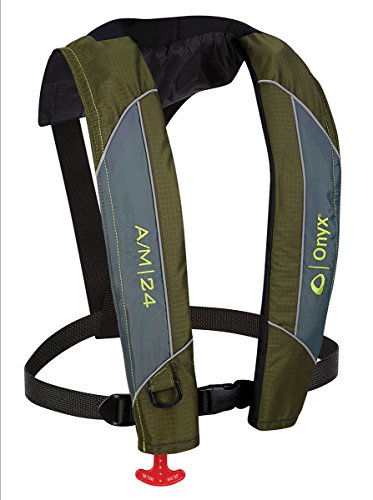
- Onyx A/M-24 Auto/Manual Inflatable Life Jacket + Add to bag~$125 · 11.2 oz < The one adults will actually wear all day. It inflates on its own when it hits the water. Inflatables aren't for kids under 16 or weak swimmers, and you need to check the CO2 cylinder before each trip.
- Airhead General Purpose Foam Life Vest + Add to bag~$30 · 1 lb < Foam floats you with nothing to arm or maintain. Keep a few aboard so every guest has one.
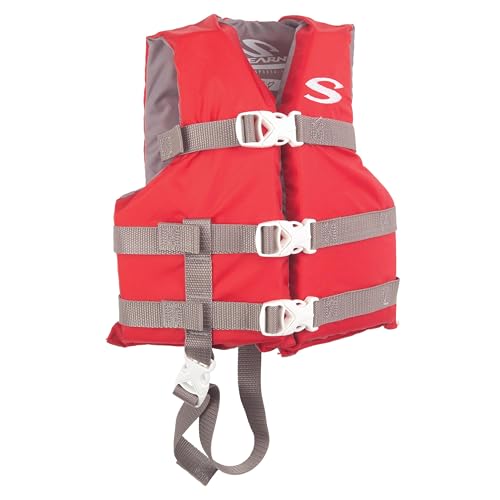
- Stearns Kids Life Vest (30-50 lb) + Add to bag~$38 · 9.2 oz < Sized for kids. Buy for the weight on the label, not the age.
- Airhead Infant Life Vest (under 30 lb) + Add to bag~$27 · 11.2 oz < Try it on the baby in shallow water before the trip.
Fit check: buckle it, then lift the jacket by the shoulders. If it rides up past the chin or ears, it's too big. On a child, it should not slide up over their face.
Before You Leave the Dock
Take a Boating Course
It's the cheapest safety gear there is, and many states require one to operate a boat. The BoatUS Foundation offers a free online course that is state-approved in many states, and the US Coast Guard Auxiliary runs classes across the country.
Get a Free Vessel Safety Check
Volunteers from the Coast Guard Auxiliary will go over your boat for free: required gear, lights, registration, fire extinguisher. No ticket, no fine, just a list of what to fix and a decal when you pass.
Check the Weather and Leave a Float Plan
Check the marine forecast, not the city forecast, and know what the wind is going to do this afternoon. Then tell someone ashore where you're going, who is aboard, what the boat looks like and when to call the Coast Guard if you aren't back.
Carry the Required Gear
The federal minimum for most recreational powerboats, in plain words (the full list is in the Coast Guard's federal requirements for recreational boats):
- A life jacket for everyone aboard, within reach.
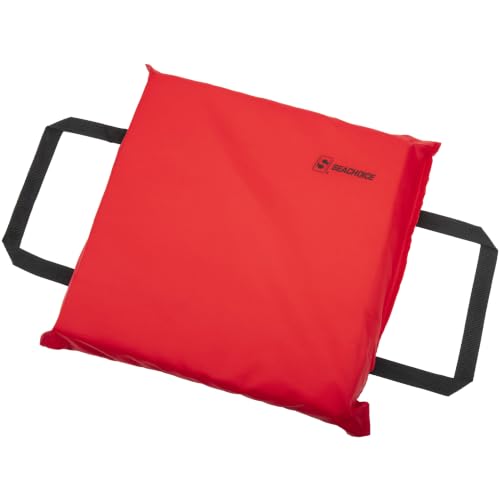
- A throwable flotation device on boats longer than 16 feet: Seachoice Throwable Flotation Cushion + Add to bag~$27 · 1.5 lb
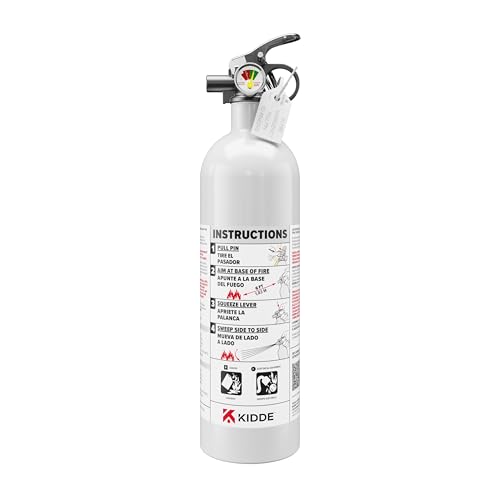
- A marine fire extinguisher on most powerboats: Kidde Mariner 5-B:C + Add to bag~$20 · 2.8 lb
- A sound signal, a whistle or horn: UST JetScream Floating Whistle + Add to bag~$11 · 0.3 oz
- Visual distress signals on coastal waters. The day and night signals in my overboard bag cover it.
- Navigation lights that work, if you're out between sunset and sunrise or in poor visibility.
Your state may add to that list, so check your state boating agency's rules too.
Underway
Wear the Engine Cut-Off Lanyard
Since April 2021, federal law requires the operator of a boat under 26 feet to use the engine cut-off switch when the boat is on plane or above displacement speed, if the boat has one (U.S. Coast Guard announcement). Clip the lanyard to your life jacket or wrist. If you go over, the engine stops and the boat doesn't circle back and run you over.
Leave the Alcohol at the Dock
Sun, wind, noise and motion all make alcohol hit harder on the water. Boating under the influence is illegal in every state, and it's the single biggest known factor in boating deaths: 20% of them in 2024 (USCG).
Watch for Carbon Monoxide
Engine and generator exhaust collects around the stern and the swim platform. Never hang on the swim platform or "teak surf" behind a running engine, and keep the stern clear while the engine idles.
Keep a Lookout
Operator inattention and improper lookout top the Coast Guard's list of accident causes (USCG, 2024). Someone should be watching the water ahead every second the boat is moving.
If Someone Goes Overboard
My training drills one rule into you: don't become the second victim. On the water the order is reach, throw, row, don't go.
- Reach with a boat hook, a paddle or an arm while you hold onto the boat.
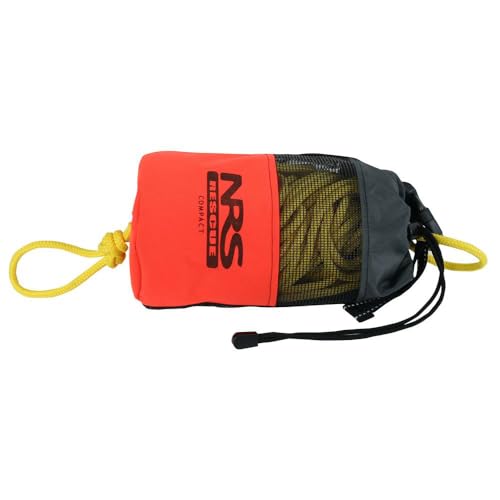
- Throw something that floats: the cushion, or a NRS Compact Rescue Throw Bag + Add to bag~$70 · 1.2 lb that gives you 70 feet of floating rope to pull them in with.
- Row or motor to them carefully, approaching from downwind with the engine in neutral when you're close.
- Don't go in after them unless you're trained, and never without flotation.
Point at the person and keep pointing. Assign someone to do nothing but watch them. In waves you can lose sight of a head in seconds.
Cold Water: The 1-10-1 Rule
This rule of thumb comes from cold-water researchers and is taught by the Canadian Safe Boating Council:
- 1 minute of cold shock: you gasp and breathe hard. Get your breathing under control and keep your face out of the water.
- 10 minutes of useful movement before your arms and legs stop working. Use them to get out or to get a grip on something that floats.
- About 1 hour before hypothermia makes you lose consciousness. With a life jacket on, you're still floating when help gets there.
Once someone is back aboard, treat them gently for hypothermia: get them out of the wind, out of wet clothes and into something warm. My first aid and exposure guide covers the kit, and a watertight one like the Adventure Medical Kits Ultralight/Watertight .5 + Add to bag~$32 · 3.5 oz belongs on every boat.
If You Have to Leave the Boat
Sometimes the boat is the problem: fire, flooding, a capsize. That's what the overboard bag is for. It holds the beacon, the floating radio, the distress signals and the water that get you found and keep you going, and it's the one bag that leaves the boat with you. Clip a water-activated strobe + Add to bag~$25 · 2.5 oz to every life jacket while you're at it.
Read the Overboard Bag guide or build one in the bag builder.
Water Safety FAQ
Do adults have to wear a life jacket on a boat?
Federal law requires one for every person aboard, within reach, but only children under 13 have to wear one (where the state has no rule of its own). Some states require them on paddle craft or in cold months. Wear it anyway: most people who drown in boating accidents weren't wearing one.
Are inflatable life jackets safe?
Yes, for adults who can swim, if you keep them armed and check the cylinder. They aren't for children under 16 or weak swimmers, and they aren't a good choice for activities where you expect to be in the water a lot, like tubing or water skiing.
What safety gear is required on a small boat?
At minimum, a wearable life jacket for each person, a sound device, and on most powerboats a fire extinguisher. Boats longer than 16 feet also need a throwable device, and coastal boats need visual distress signals. Check your state's rules too.
What is the engine cut-off switch law?
Operators of boats under 26 feet that have a cut-off switch must use it when the boat is on plane or above displacement speed. It doesn't apply at idle, docking or trolling speeds.
How long can you survive in cold water?
Remember 1-10-1: about one minute of cold shock, ten minutes of useful movement and roughly an hour before you lose consciousness from hypothermia. A life jacket keeps you afloat through all of it.
Is a boating safety course required?
Many states require one, often for younger operators or anyone born after a certain year. The free BoatUS Foundation course is state-approved in many states.
Sources
- U.S. Coast Guard: 2024 Recreational Boating Statistics (drowning, life jacket, alcohol and instruction figures)
- U.S. Coast Guard: Coast Guard reports fewest boating fatalities in more than 50 years (leading accident causes)
- U.S. Coast Guard: Boating Safety FAQ (children's life jackets, throwable devices)
- U.S. Coast Guard: Federal requirements for recreational boats
- U.S. Coast Guard: Engine cut-off switch law announcement
- Canadian Safe Boating Council: The 1-10-1 Principle
- BoatUS Foundation: Free boating safety course
About the Author:
Mr.BOBB is EMT-certified, a CERT team member, a Ham Radio General class operator and a Mass Casualty Events-trained first responder, with more than 15 years of preparedness behind him. He built his first bug out bag in 2010 and the site followed soon after. He created the BOBB Five-Part Emergency System and the WUSH Bag concept.

Got a question about your bag?
Ask it in the Bug Out Bag Builder group on Facebook. Members share their builds, compare gear and help each other out.